
Put simply, self-promotion is promoting yourself to others. From writing a cover letter for a job application, to filling out your Tinder profile, we tend to put ourselves in the best light possible, to attract what we want. Some of us are great at this and realise the value in it. Others (like me) tend to shy away from it and hope that our boss, manager and peers are already aware of our value.
Then there are the corporate self-promoters who get ahead without really doing much, apart from tooting their own horn. This can lead to a serious drop in team motivation.
‘Staff who spent their time promoting themselves in meetings were likely to benefit more than colleagues who were doing the work. It can leave other staff feeling stretched and without any sense of “togetherness”. – BBC
Are we missing out?
Sadly, the fact is, a lot of awesome people are overlooked for promotion, don’t get the bonus they wanted (or at all) and are often on the sidelines watching others confidently talk themselves up and get ahead, when sometimes that person probably should’ve been you.
The problem is, managers might be too preoccupied with promoting themselves to their own boss, or just dealing with other things, to really notice your worth.
Self-promotion overload
When it comes to social media, we’re no longer impressed by fancy images and seemingly luxe lifestyles, AKA the early instagram era. Thanks to new rules from the Advertising Standard Authority (ASA), since 2018, influencers now have to declare when they’re promoting a product, or they risk hefty fines. We’re aware that what we see on social media isn’t always entirely accurate. A lot of the happy shiny people we see showcasing their seemingly perfect lives are plagued with self doubt, imposter syndrome, or suffering from a mental illness. And this has had a ripple effect across the world.
“Instagram vs reality” photos have grown in popularity as influencers attempt to make themselves seem more accessible. Influencers have also been actively speaking out themselves about burnout, mental health, and the stress that comes with maintaining perfection.
– The Atlantic
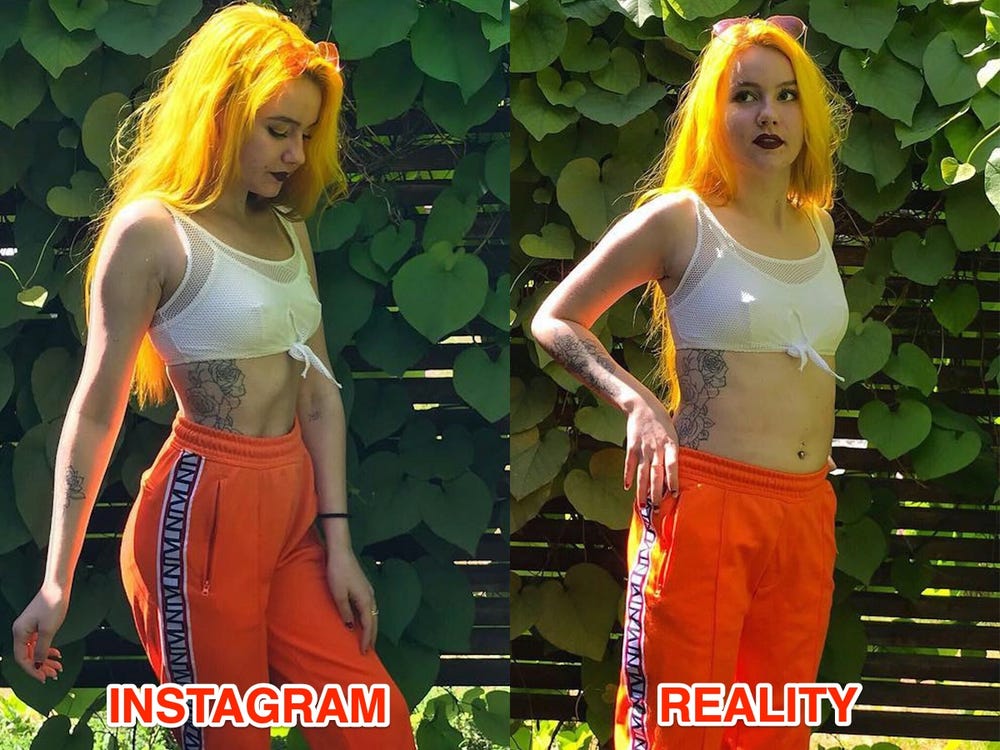
Sara Puhto’s “Instagram versus Reality” posts to her Instagram page.
Burnout
Left exhausted and anxious, feeling our lives are way below average compared to online, we’re now seeking out genuine people and experiences. We want to feel part of a community, even if that is mostly online these days. In times of what feels like a never ending slew of bad news, there’s a need to protect our minds from taking too much in.
Platforms like instagram have thankfully been turning things around and making some improvements for the benefit of users. They’re placing higher value on accounts interacting with each other. Engagement is the new ‘likes’. And it’s the same when self-promoting in the real world.
But why do some of us hate doing it?
Ever been cornered and sold to? It sucks doesn’t it, you feel awkward and slightly annoyed that this person is bothering you, they just won’t quit and in the end you have to somewhat forcefully decline in order to end the conversation. The premise is the same, but when you’re self-promoting, it shouldn’t be forceful like you’re trying to meet your sales targets.
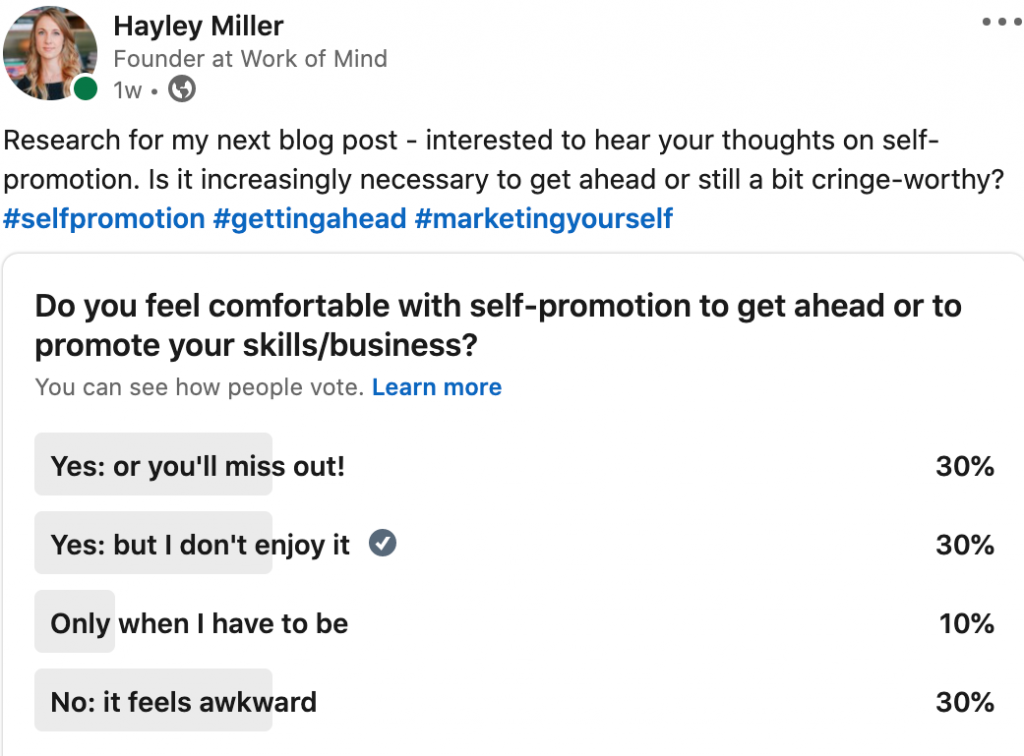
I posted a quick poll to my network on LinkedIn to see how people feel about self-promotion. It seems people are aware of what they need to do to get ahead and are happy to self-promote (whether they like doing it or not) but there are still those who feel the whole thing is awkward and would rather avoid it altogether.
If, like me, you wince at the thought of projecting yourself onto others, then worry not, we can get better at it together. It’s a learning curve, and like most new things, it just takes a bit of practice.
So, read on for my quick tips on self-promotion that won’t make us feel like we’re annoying the crap out of our friends and networks.
3 tips for self-promotion (without losing friends)
1. Always think about others, even when talking about yourself:
The key to selling yourself to others, is not by purely talking about how amazing you are, but how you add value in certain situations and provide something genuinely interesting to the other party.
Real life example: Professional community hub ‘The Dots’, has a cool feature where you can earn a ‘Wise Owl’ badge for your profile once you’ve shared your wisdom on several community posts. And who doesn’t love a bit of gamification. If, like me, you wonder if your advice is actually good enough, give yourself the benefit of the doubt. I replied to one question and received a nice response, so now I’ve done it several times and it feels nice to share insights and connect with others. This is ultimately the vibe you want when self-promoting; give insights based on your experience. Back up your words by adding real value to the other person, and just be nice!
2. Determine your values:
If you haven’t got some already, now’s a good time to write down your values. Values are a good way to stay on track with your goals and aspirations. You can read more about this in my values blog post but ultimately, your values help keep you on track by reminding you what’s most important to you, not only in life but in work too.
Real life example: My values reflect who I want to be: Open, Inquisitive, Honest and Humble. I naturally seek out others with similar values and the same goes for future employers. Try this with a good friend or partner: ask them to write down four or five values and then read both of yours together.
3. Be a true network ally, not a fair weather communicator:
It’s funny how some people only come out of the woodwork when they need something! Don’t be that guy. Make regular time for people: check in, say hello, comment on their latest post, congratulate them on their recent job move. People don’t forget those who make an effort and will be more willing to be there for you when it matters.
Real life example: I aim to spend around 10-15 minutes a day liking, sharing and/or commenting on posts that resonate with me, especially professional sites like LinkedIn and The Dots. And always, always, support your friends in their new venture, even if it’s liking every single one of their new instagram page posts on demand (apologies to my pals!).
Mind points:
Here are some takeaways to remember when you’re having doubts about self-promotion:
- Someone knocked your confidence? Whether they were right or wrong to call you out on it, hopefully you’ve used it to learn and grow from. Always take feedback onboard and use it to develop yourself. We are and will always be learning.
- You are not who you were 1, 5 or 10 years ago. Sometimes our mindset gets trapped in history and we can feel stuck in a rut mentally. If you are an inquisitive person, there is no doubt you have developed and have new skills to offer. Focus on your strengths whilst developing what you feel are your weaknesses. Nobody, I repeat, nobody thinks they are perfect, we all have doubts but it’s important to stay focused and continue!
- You can’t always get what you want. Even if you’ve done your very best and seemingly ticked all the boxes, sometimes you’re just not meant to win. Whether it’s a new client or promotion, decisions are taken out of your hands. It’s important to focus on what you can control and let go of what you can’t, but do embrace how it made you feel, it will make you a more resilient person and that is a useful trait to have.
- Simply be yourself! We can be influenced by others and that can be a good thing, but don’t lose sight of who you are. Don’t follow. Make things your own and trust your gut. Staying true to yourself and your values will keep you on track for a more fulfilling life ahead.
- Don’t forget to breathe! Sure, it’s simple, but it’s also incredibly effective. Bringing your thoughts back to the breath is the easiest way to take a timeout and reflect. It’s also the best and quickest way to be more mindful every day (and stay sane!).
Resources:
- 40 ways to self-promote without being a jerk – Forbes
- 5 tips for practicing self-promotion – Entrepreneur
- 11 rules for self-promotion – Life Hack
- Influencers are abandoning the instagram look – The Atlantic
- Reality behind the ‘perfect’ instagram photo – The Insider
- Reputation Matters – Management Today
- ‘Self-promoters’ do nothing but still get ahead – BBC
- An influencers guide to making ads – ASA
Join The Conversation
Tell us about your experiences, good and bad, in the comments below.
Thanks for reading!